


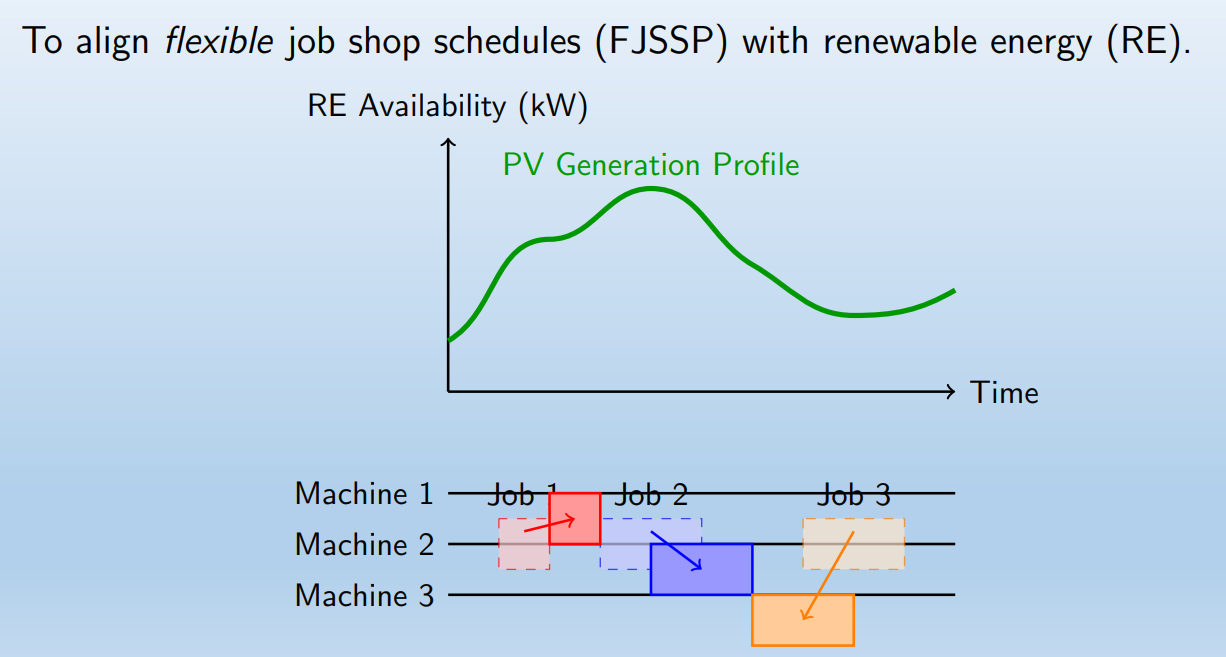
Picture a factory with hundreds of machines producing goods. This research creates a smart schedule that tells those machines when to operate, specifically when clean solar energy is plentiful instead of when electricity comes from polluting sources. The challenge is that solar power isn’t constant; it changes with the weather. The researchers built algorithms that predict these solar patterns and plan factory work around them, while still ensuring all products are made on time. It is similar to having a smart factory manager who always knows the perfect time to turn machines on to use the cleanest energy available.
The paper was recognised with the Best Paper Award at the IEEE RTSI conference 2026.
Outline the paper
This research from LUT University in Finland explores an interesting idea: factories could dramatically cut their carbon footprint by simply running their machines when clean solar energy is most abundant. The paper proposes smart algorithms that create production schedules balancing two goals—finishing work on time and using as much renewable power as possible. This gives manufacturers a practical, affordable way to go greener without buying new equipment.
What does this mean for industry and society?
Manufacturing consumes nearly a third of the world’s energy and produces a huge share of carbon emissions. If factories could align their operations with renewable energy availability, it would be a major win for the climate. This approach doesn’t require expensive new machinery, just smarter planning. As renewable energy becomes cheaper, it could also save companies money. With governments pushing for net-zero emissions, this gives heavy industry a practical way to meet climate targets without slowing down production or making massive investments.
What are the next steps?
Next, the team wants to test their approach in real factories to see how it works in practice, not just in simulations. They also plan to adapt it for other renewable sources like wind power and test it in different regions with varying weather patterns. Another goal is making the system more flexible to handle unexpected situations like forecast errors or rush orders. The ultimate vision is creating easy-to-use software that any manufacturer, anywhere, can adopt to cut emissions and energy costs.
Publication Title: Renewable Energy-centric Flexible Job Shop Scheduling
Authors: Arun Narayanan, Christian Perez Bernal, Flavio Henry Ferreira, Pedro H. J. Nardelli
Name of Conference: IEEE RTSI 2026 Conference
Conference Date: 16-18 August 2026