
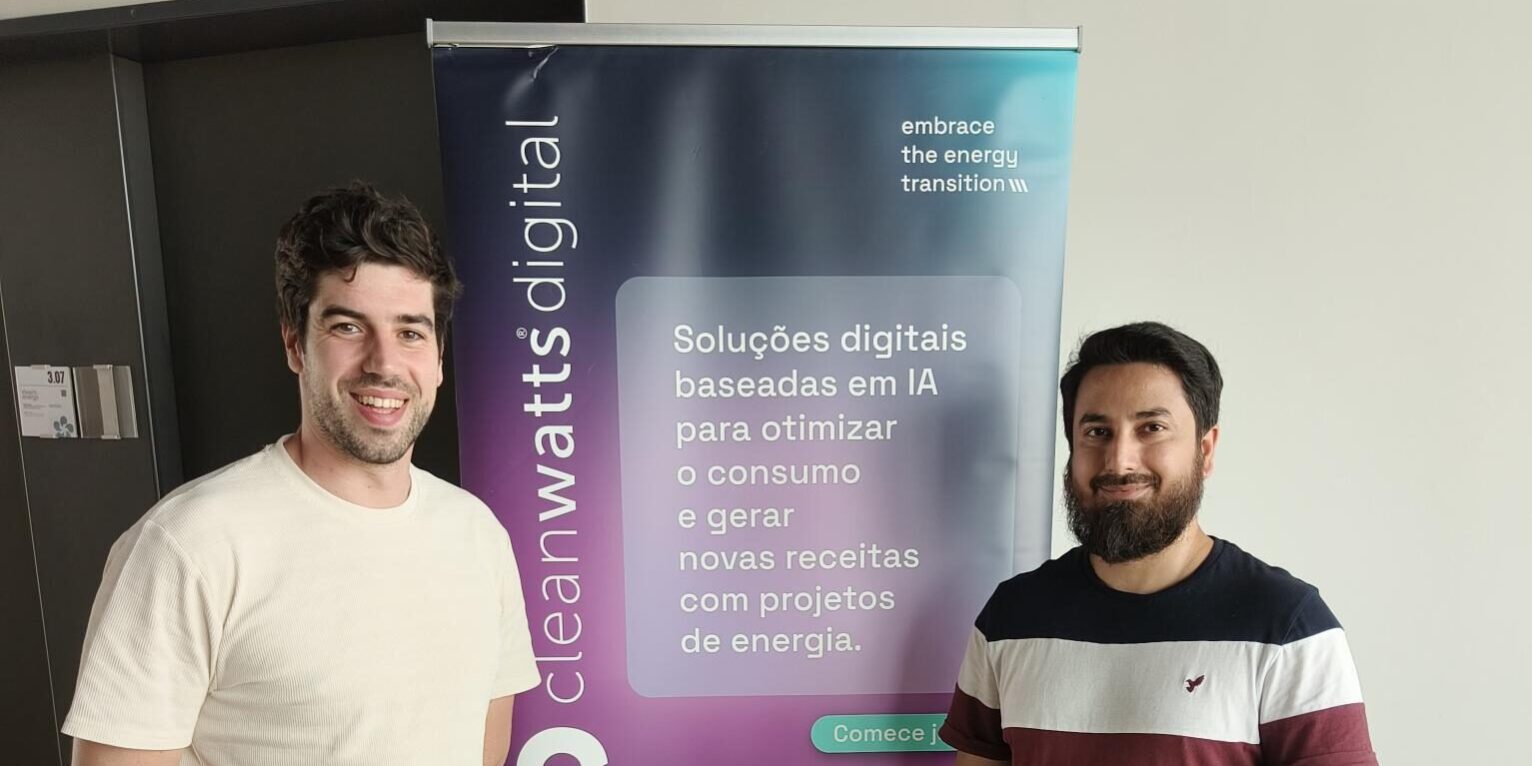
Dr. Hafiz Majid Hussain, a researcher affiliated with Lappeenranta University of Technology and the cyber-physical systems group (CPSG), recently completed a two-and-a-half-month secondment at Cleanwatts Digital in Portugal (15 May 2026 – 31 July 2026), as part of the COALESCE project.
Dr. Hafiz Majid opted to undertake this secondment at Cleanwatts Digital in Portugal because it presented a unique opportunity to engage with their real-world implementation of smart energy systems, pioneering work in operating Renewable Energy Communities (RECs), and interdisciplinary team focused on digital energy solutions. This directly complemented his research in the areas of smart energy systems, resource optimization in multi-agent systems, and demand response applications.
Dr. Hafiz Majid’s visit primarily involved working at Cleanwatts, where he engaged in close collaboration with Dr. Lurian Klein, Innovation Developer at Cleanwatts Digital, and their respective teams. During this engagement, he stated that the collaboration extended beyond technical research to encompass strategic discussions on various other projects such as the Research Council of Finland (RCF) and future collaborations. This secondment built directly on his earlier visit in November–December 2024, during which he gathered data and developed comprehensive reports on “Energy Management System in a Grid-Tied PV Battery Microgrid for a Building” and “Smart Energy Management System in the Mussalo Smart Grid.”
A key highlight of this second secondment was the opportunity to use Cleanwatts’ commercial battery management data to build on this earlier groundwork and complete a conference paper titled “Comparative Evaluation of MILP, MPC, and Reinforcement Learning for Commercial Battery Dispatch Under Time-of-Use Tariffs,” demonstrating how sustained industry access, from initial data collection to eventual publication, translates into concrete research outcomes. Together, these reports and the resulting publication establish an instrumental and mutually beneficial sharing of knowledge, fostering cross-sectoral collaboration and enriching the research capacities of both organizations. Additionally, these outputs provide a framework for reciprocal visits of LUT researchers to Cleanwatts, with the objective of ensuring a seamless and productive exchange of expertise.
Furthermore, this mutually beneficial secondment significantly contributed to Dr. Hafiz Majid’s professional growth as part of LUT and the success of the COALESCE project. “I developed an enhanced ability to integrate technical and social research, empowering me to design research strategies that consider broader societal impacts, a core strength of my expertise. Beyond this, the secondment provided direct access to real commercial data that translated into a peer-reviewed publication, strengthening the academic output tied to COALESCE. For COALESCE, my time ensured a stronger cross-sectoral foundation by aligning LUT’s and Cleanwatts’ research practices and establishing effective shared structures. This, in turn, deepened the essential collaboration between academia and industry, a cornerstone of COALESCE’s objectives,” explained Dr. Hafiz Majid.
He added, “Finally, the key insight gained during my time at Cleanwatts was the critical need for seamless interdisciplinary collaboration, and the value of translating industry data into rigorous, publishable research. It strengthened my conviction that integrating technical energy solutions with social research yields more resilient and community-focused energy systems. This perspective will directly inform future strategies at LUT, particularly in how we develop and implement our microgrid and RECs offerings.”