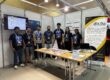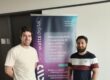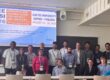

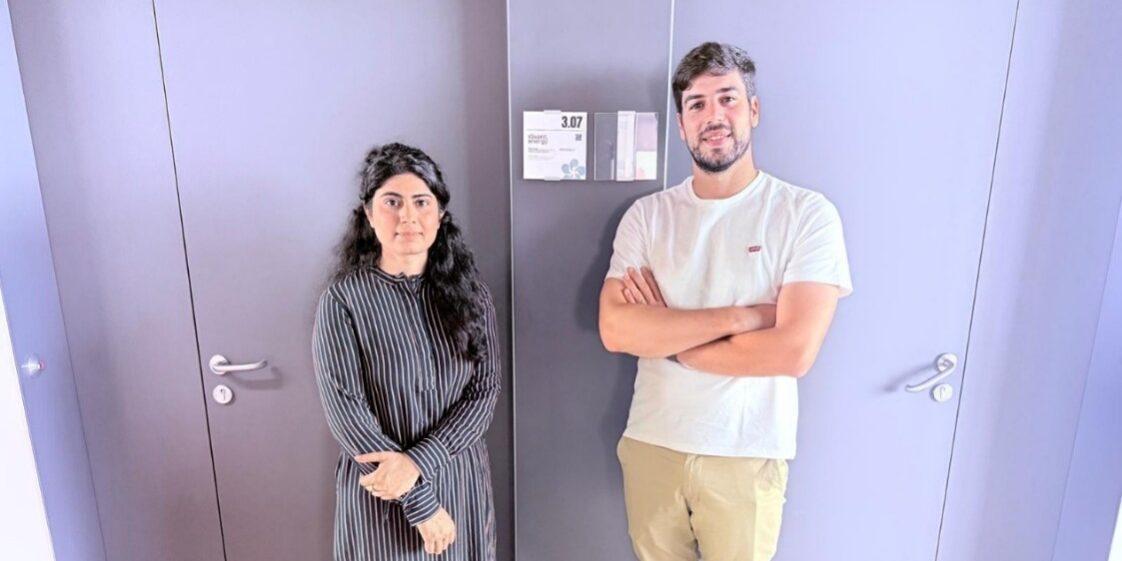
Madia Safdar, a Junior Researcher at LUT University, Finland, recently completed a secondment at Cleanwatts Digital in Portugal as part of the COALESCE project.
Madia chose Cleanwatts Digital because of its work in digital energy management, renewable energy integration, photovoltaic (PV) and energy price forecasting, and battery energy storage. These areas closely align with her research interests in energy storage planning and optimisation. The secondment provided an opportunity to explore how these concepts are applied in an industrial environment and to gain a better understanding of the practical challenges involved.
During her secondment, Madia participated in technical meetings, discussions and knowledge-exchange activities with the technical team working on energy management systems. Topics included commercial energy management, PV integration, grid electricity price forecasting and the optimal operation of battery energy storage systems (BESS) to reduce customers’ energy costs.
She also gained insight into the collection and use of real-time energy data, which is particularly relevant to her research on battery planning and optimisation. These discussions helped bridge the gap between theoretical approaches developed in academia and the practical requirements of real-world energy management.
The secondment strengthened the connection between Madia’s academic research and industrial applications. It provided practical insights into the challenges and operational requirements of commercial energy management and helped her identify considerations that can be incorporated into her research. For the COALESCE project, the secondment also supported knowledge exchange between academia and industry and strengthened the potential for applying research outcomes to practical energy management and energy storage solutions.
Reflecting on her experience, Madia said:
“One of the most valuable experiences during my secondment was the opportunity to meet and collaborate with the technical team and engage in discussions about their ongoing work in energy management systems. These interactions provided an enjoyable way to exchange ideas, learn from different perspectives, and experience the collaborative working culture within an international industry environment.”
Looking ahead, Madia plans to build on the knowledge gained during the secondment:
“The next step is to further develop and test my battery planning and sizing algorithms using realistic, real-world energy data. The insights gained during the secondment will help me incorporate more practical operational constraints into my research and improve the industrial relevance of the proposed solutions. Where possible, the real-time energy data and practical knowledge gained through the collaboration can also support the validation of the developed algorithms.”